If you own an asphalt driveway or manage a commercial parking lot in Central Florida, you've probably noticed how quickly the surface can start looking rough—faded, cracked, or dotted with potholes. Florida's combination of intense sun, extreme summer heat, and heavy seasonal rain is uniquely hard on asphalt, and sealcoating is one of the most cost-effective ways to fight back.
Whether you're a homeowner in Port Orange wondering if it's time to reseal the driveway, or a business owner in Orlando managing a parking lot that sees daily traffic, this guide covers what sealcoating and striping actually do, when to schedule them, what they cost, and whether DIY makes sense for your project.
Why Florida Is So Hard on Asphalt
Asphalt is a mix of aggregate and asphalt binder—essentially a petroleum-based glue that holds everything together. That binder is the part of the pavement most vulnerable to our climate.
UV Exposure and Oxidation
Florida gets some of the most intense, consistent sun exposure in the country. UV radiation breaks down asphalt binder over time through oxidation, causing the surface to fade from deep black to a dull gray. Once oxidation sets in, the asphalt becomes brittle and starts to crack and crumble.
Heat Cycling
Summer pavement temperatures in Central Florida regularly climb well above the air temperature, sometimes reaching 140°F or more in direct sun. Combined with sudden afternoon thunderstorms that cool the surface rapidly, this creates repeated expansion and contraction that stresses the asphalt and accelerates cracking.
Heavy Rain and Standing Water
Water is asphalt's enemy. Once small cracks form, rainwater seeps into the base layer beneath the pavement. Repeated saturation weakens the base, leading to potholes and larger structural failures that are far more expensive to fix than a crack ever would have been.
Oil, Chemicals, and Traffic
Parking lots and driveways also take a beating from oil drips, gasoline spills, and constant vehicle traffic, all of which break down unsealed asphalt faster than exposure to weather alone.
What Sealcoating Actually Does
Sealcoating is a protective liquid coating applied over existing asphalt. It doesn't repair structural damage, but it does several important things:
- Blocks UV rays that cause oxidation and fading
- Repels water so it can't seep into small cracks and the base layer
- Resists oil and gas that would otherwise soften and break down the surface
- Restores a fresh, dark finish that improves curb appeal
- Fills fine surface cracks before they widen into potholes
Think of sealcoating like sunscreen and a raincoat for your pavement combined—it doesn't make asphalt indestructible, but it dramatically slows the deterioration process.
When to Sealcoat in Florida
New Asphalt
Fresh asphalt needs time to cure before sealcoating. We generally recommend waiting 90 days to a full year after installation, allowing the oils in the new asphalt to cure properly before sealing over them.
Existing Driveways and Lots
For most Florida properties, we recommend sealcoating every 2-3 years. Properties with heavy sun exposure, frequent traffic, or coastal salt air may benefit from sealing closer to every 2 years, while lightly used residential driveways in shadier spots can sometimes stretch to 3 years between applications.
Signs it's time to reseal include:
- Asphalt has faded from black to gray
- Small hairline cracks are starting to appear
- Water no longer beads on the surface
- Faded or barely visible parking lines
- It's simply been more than 2-3 years since the last application
Best Time of Year
In Central Florida, fall and winter (roughly October through March) are ideal for sealcoating. Lower humidity and less frequent rain make it easier to get a clean, uninterrupted cure. Sealcoating during peak summer rainy season is possible but requires careful weather planning, since sealer needs dry conditions for at least several hours after application.
Parking Lot Striping
For commercial properties, striping is just as important as sealcoating. Faded parking lines and worn accessible parking markings aren't just a cosmetic issue—they create real safety hazards and can put a business out of compliance with ADA requirements.
We typically recommend striping alongside sealcoating for the cleanest results, since fresh sealer provides a uniform, dark background that makes new striping pop. Common striping needs include:
- Standard parking stalls
- ADA-compliant accessible parking spaces and access aisles
- Fire lanes and no-parking zones
- Directional arrows and stop bars
- Custom markings for loading zones or specific business needs
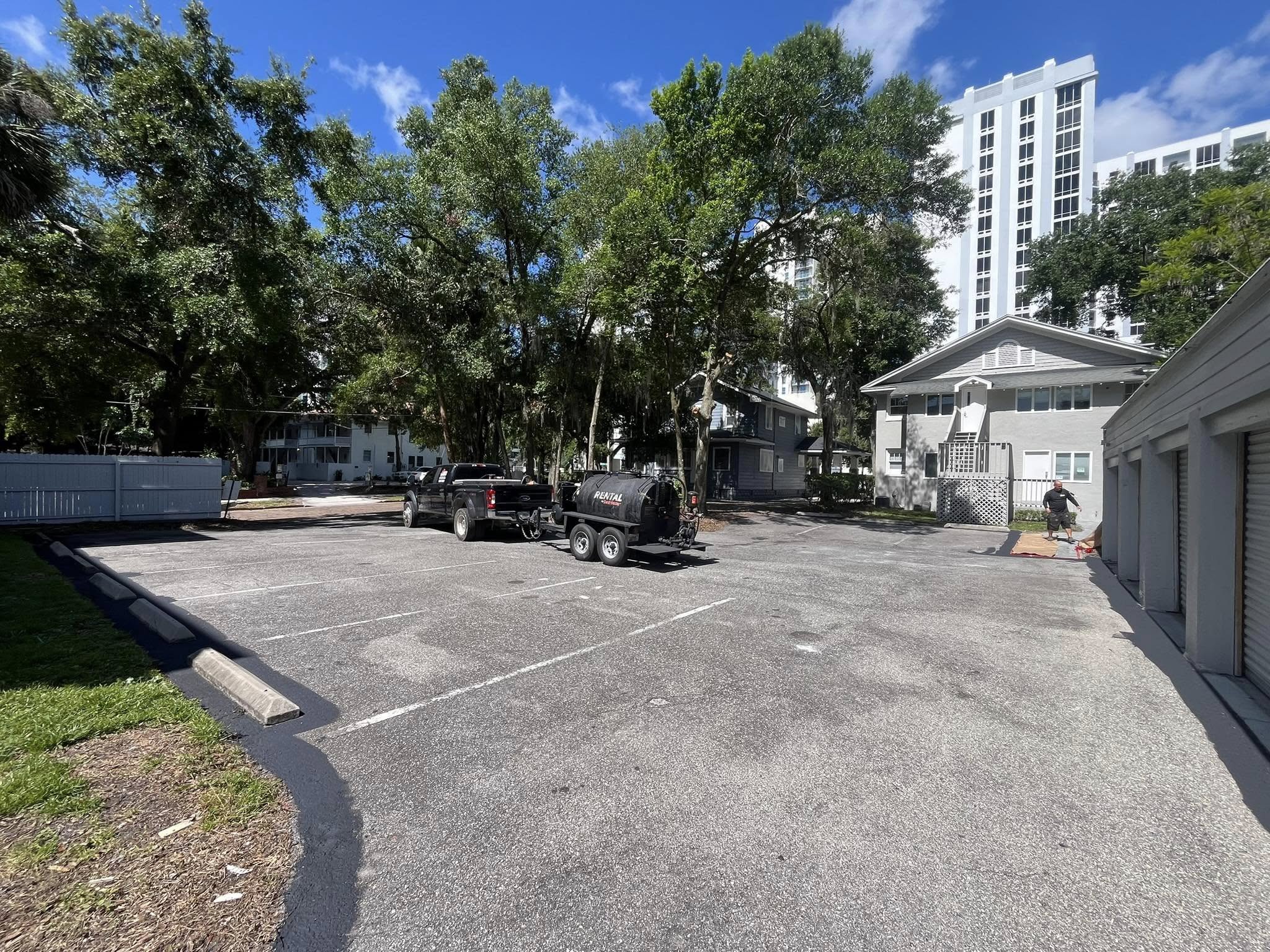
We recently completed a parking lot sealcoating and striping project in Orlando, refreshing worn pavement markings while protecting the asphalt underneath—exactly the kind of two-in-one project that gets the most value out of a single maintenance visit.
What Does Sealcoating and Striping Cost?
Pricing depends primarily on square footage, current pavement condition, and whether striping is included. A small residential driveway costs far less than a large commercial lot, and lots requiring crack filling or pothole patching before sealing will cost more than pavement in good condition. Because every property is different, we provide free, detailed estimates based on an on-site assessment rather than a flat per-square-foot quote.
Whatever the upfront cost, sealcoating is far less expensive than the alternative: full-depth asphalt replacement, which typically becomes necessary once the base layer has failed. Regular sealcoating is one of the best investments you can make to delay that expense for years.
DIY vs. Professional Sealcoating
When DIY Can Work
Small residential driveways in good condition are reasonable DIY candidates if you're comfortable with the physical labor involved. Store-bought sealer, a squeegee or roller, and a weekend of good weather can produce acceptable results on a modest driveway.
When to Hire a Professional
Larger driveways, commercial parking lots, and any pavement that needs crack filling or patching before sealing are best left to professionals. Commercial-grade sealer, proper application equipment, and experience reading pavement condition all make a meaningful difference in how long the results last. Striping in particular requires the right paint, layout knowledge, and equipment to produce straight, evenly spaced, code-compliant lines.
Frequently Asked Questions
How often should I sealcoat my driveway or parking lot in Florida?
Most Florida asphalt surfaces should be sealcoated every 2-3 years. Properties with heavy sun exposure, high traffic, or coastal salt air may need sealing closer to every 2 years to keep up with the extra wear.
Can sealcoating fix cracks and potholes?
Sealcoating fills very fine surface cracks but isn't a structural repair. Larger cracks and potholes need to be patched or filled before sealcoating, which is why a proper sealcoating job often starts with a pavement assessment and any necessary repairs.
Is it better to sealcoat and stripe at the same time?
Yes, for commercial lots we recommend doing both together. Fresh sealer provides a clean, dark surface that makes new striping look crisp, and combining the work into one visit is more efficient than scheduling separate projects.
How long does asphalt sealcoating take to dry?
Sealcoating is typically dry to the touch within a few hours but needs 24-48 hours before it can handle vehicle traffic. We plan applications around Florida's weather patterns to avoid rain interrupting the cure.
Professional Asphalt & Hardscape Services
Austin Brown Construction provides asphalt paving, sealcoating, striping, and hardscape services throughout Port Orange, Daytona Beach, Orlando, and Central Florida. Visit our asphalt & hardscape services page to learn more, or contact us today for a free assessment and quote.