
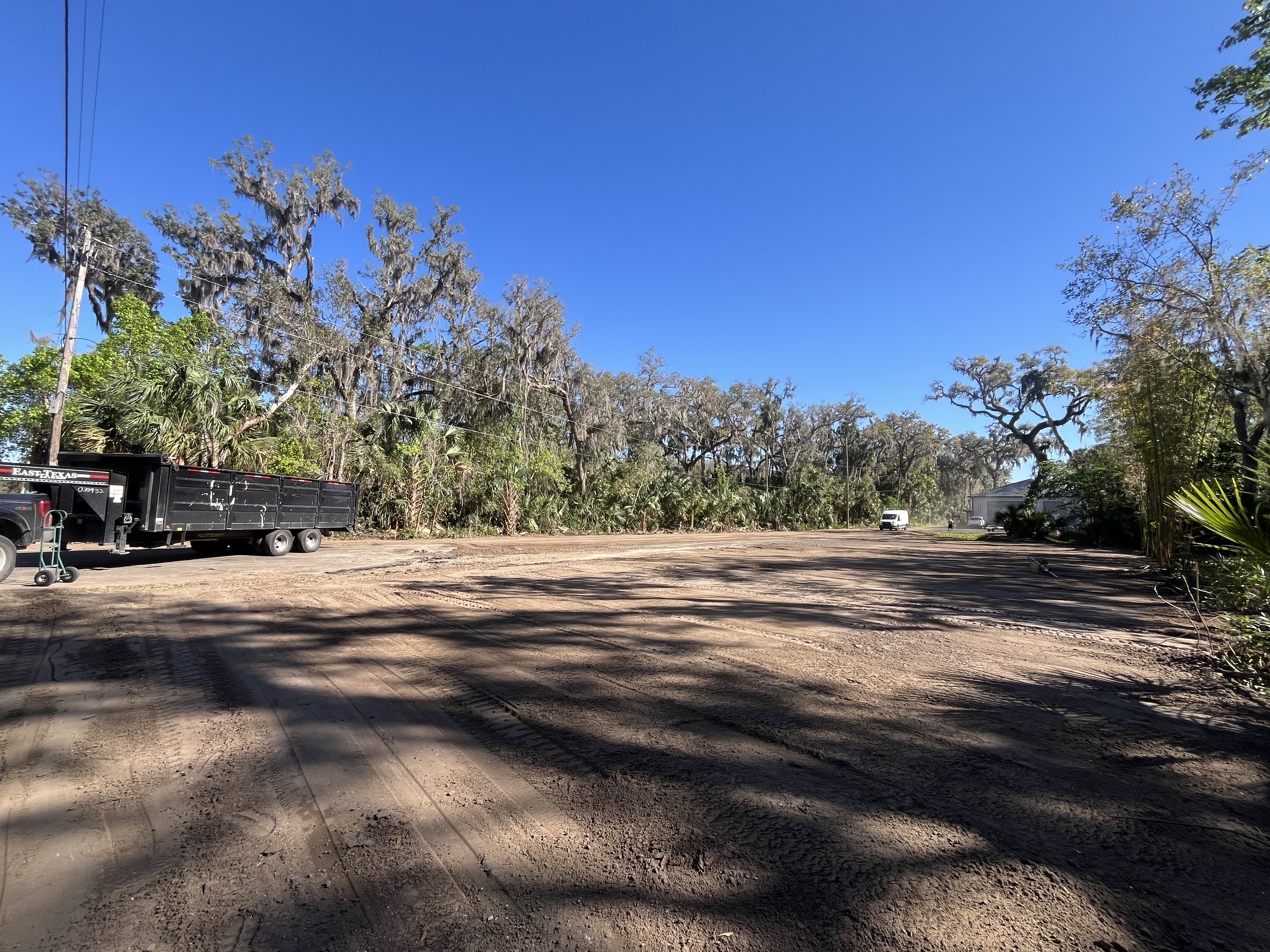
Few problems frustrate Florida homeowners more than standing water in the yard. After a typical summer afternoon downpour, low spots turn into puddles that linger for hours or days, lawns drown, mosquitoes breed, and—most concerning—water collects against the foundation of your home. In a state that averages 50-60 inches of rain a year, with daily thunderstorms through the wet season and the ever-present threat of tropical systems, proper drainage isn't a luxury. It's essential protection for your property.
If you live in Port Orange, Daytona Beach, New Smyrna Beach, Ormond Beach, or anywhere in Volusia County, you've likely seen what poor drainage can do. This guide explains why standing water happens here, the drainage solutions that actually work in Florida's flat terrain and sandy-to-clay soils, what each option costs, and how to know when it's time to call a professional.
Why Drainage Problems Are So Common in Central Florida
Central Florida combines several factors that make drainage uniquely challenging compared to other regions. Understanding the causes helps you target the right solution rather than throwing money at symptoms.
Flat Terrain and Low Elevation
Much of Volusia County sits at low elevation with very little natural slope. Water needs gravity to move, and when your lot is nearly level, rainfall has nowhere to go. It simply pools wherever the ground dips, including against your home. Many properties were also graded decades ago, and settling over time has created low spots that now trap water.
High Water Table
In coastal and low-lying areas, the groundwater table sits close to the surface—sometimes only a few feet down. During the rainy season, that water table rises further, leaving less room in the soil to absorb additional rainfall. Once the ground is saturated, every new storm produces runoff that has nowhere to soak in.
Soil Composition
Florida soils vary dramatically, even within a single neighborhood. Sandy soils drain quickly but can erode and shift, while areas with clay or hardpan layers below the surface trap water and prevent it from percolating down. When a sandy topsoil sits over a dense clay layer, water moves down until it hits the clay and then spreads sideways—often right toward your foundation.
Heavy, Concentrated Rainfall
Florida doesn't get gentle, all-day rains as often as it gets intense, short bursts. An afternoon thunderstorm can drop two or three inches in an hour. Even well-draining soil can't keep up with that volume, so the excess becomes surface water that floods low areas and overwhelms gutters and downspouts.
Impervious Surfaces and New Construction
Driveways, patios, pool decks, and rooftops shed water rather than absorb it. As neighborhoods develop and lots get more hardscape, more runoff is generated and concentrated. New construction next door can also change how water flows across your property, sending it your way for the first time.
The Real Cost of Ignoring Drainage Problems
Standing water is more than an eyesore. Left unaddressed, drainage problems cause expensive and sometimes serious damage:
- Foundation Damage: Water pooling against the slab or footing leads to soil movement, cracking, and settling—among the most costly repairs a homeowner can face
- Moisture Intrusion: Saturated soil around the home pushes moisture inside, causing mold, mildew, and musty odors
- Lawn and Landscape Loss: Grass, plants, and trees suffocate and rot when roots sit in waterlogged soil
- Mosquitoes and Pests: Standing water is a breeding ground for mosquitoes, a serious concern in Florida
- Erosion: Moving water carves channels, undermines walkways, and washes away soil and mulch
- Concrete Damage: Water that sits against driveways and patios accelerates cracking and undermining—one reason sealing concrete and managing drainage go hand in hand
Addressing drainage proactively is almost always far cheaper than repairing the damage that poor drainage causes over time.
Proven Drainage Solutions for Florida Properties
There's no single fix for every yard. The right solution—or combination of solutions—depends on your lot's grade, soil, water source, and where the water needs to go. Here are the approaches that work best in Central Florida.
Subsurface Drains
A subsurface drain is one of the most effective and versatile drainage solutions. It consists of a perforated pipe set in a gravel-filled trench, often wrapped in landscape fabric to keep out silt. Water that collects in the soil seeps into the gravel, enters the pipe, and is carried away to a safe discharge point.
Best For:
- Chronically soggy areas and persistent low spots
- Redirecting water away from the foundation
- Properties where surface water and subsurface water are both problems
- Sloped yards where water needs to be intercepted before reaching the house
Subsurface drains require proper slope (typically a fall of about one inch per ten feet), a suitable discharge location, and correct gravel and fabric selection. Done right, they're long-lasting and nearly invisible once the grass grows back.
Surface Drains and Channel Drains
Surface drains—including catch basins and trench (channel) drains—collect water that pools on top of the ground and route it through underground pipe to a discharge point. Catch basins are grated boxes placed at low points that capture water and connect to a buried pipe network. Channel drains are long, narrow grated trenches ideal for driveways, patios, and pool decks where sheets of water need to be intercepted.
Best For:
- Low spots that collect surface water after rain
- Driveways and patios that drain toward the house or garage
- Pool decks and hardscapes that shed large volumes quickly
- Areas where you can see standing water on the surface
Grading and Re-Sloping
Sometimes the most effective solution is also the most fundamental: changing the shape of the land so water flows where you want it. Proper grading establishes a gentle slope away from your foundation—the standard recommendation is a fall of at least six inches over the first ten feet from the house.
Grading corrects negative slope (where the ground tilts toward the home), fills in settled low spots, and creates the gentle contours water needs to move on its own. It's frequently the first step before installing pipe-based systems, because no drain works well if the land itself directs water the wrong way.
Swales
A swale is a shallow, gently sloped channel—often planted with grass—that collects and directs surface water across a property. Swales are common throughout Florida because they handle large volumes of runoff naturally and blend into the landscape. They're especially useful along property lines and between structures, and they can carry water to a retention area, storm system, or other approved discharge point.
Dry Wells
A dry well is an underground chamber—often a perforated tank or gravel-filled pit—that collects runoff and lets it slowly percolate into the surrounding soil. Dry wells are useful when there's no good place to discharge water at the surface, such as a flat lot with no nearby storm drain or low point. They work best in well-draining sandy soil and are often paired with downspout extensions or subsurface drains.
Downspout Extensions and Gutter Management
Before investing in major systems, it's worth confirming your gutters and downspouts are doing their job. A surprising number of drainage complaints trace back to downspouts dumping concentrated roof runoff right at the foundation. Extending downspouts to carry water several feet away—or tying them into an underground drain line—is often a low-cost, high-impact first step.
Diagnosing Your Drainage Problem
Choosing the right solution starts with understanding where the water is coming from and where it's going. A proper assessment looks at several factors:
- Where water pools: Note the exact low spots and how long water lingers after rain
- Source of the water: Roof runoff, surface flow from higher ground, a neighboring property, or a high water table all call for different fixes
- Slope and grade: Which direction does the land fall, and does it slope toward or away from the home?
- Soil type: Sandy soil percolates well and may favor a dry well; clay layers usually require piped systems that carry water off-site
- Discharge options: Where can the collected water legally and safely go—a swale, storm drain, retention area, or street?
This diagnostic step matters because installing the wrong system, or installing the right system in the wrong place, wastes money and rarely solves the problem. Professional drainage solutions begin with a thorough on-site evaluation.
What Affects Your Yard Drainage Cost
Drainage project costs vary widely based on the system type, yard size, soil conditions, accessibility, and how far water must be carried to a discharge point. Rather than a one-size-fits-all price, here's how the common solutions compare.
- Downspout Extensions: The most affordable option; cost depends on length and whether the lines are buried
- Subsurface Drains: Priced by the length of the run and depth; a common mid-range solution for chronic wet spots
- Catch Basins / Surface Drains: Cost scales with the number of basins and the amount of connecting pipe
- Channel (Trench) Drains: Priced by length; common for driveways and patios
- Grading and Re-Sloping: Depends on yard size and the amount of soil moved
- Dry Wells: Depends on chamber size and soil conditions
- Comprehensive Systems: The largest investment, for properties needing multiple integrated solutions
While drainage work represents a real investment, it's modest compared to the cost of foundation repair, mold remediation, or replacing a failed concrete driveway undermined by water. Drainage work protects far more valuable assets.
Permitting and Code Considerations
Drainage work in Florida sometimes intersects with local regulations, especially when it involves significant grading, discharge into public systems, or work near wetlands or retention areas. Some municipalities in Volusia County require permits for grading or for tying into a storm system, and many neighborhoods have HOA rules about where water can be directed.
A critical rule of thumb: you cannot solve your drainage problem by sending water onto a neighbor's property. Doing so can create disputes and liability. A professional contractor understands these requirements and designs systems that discharge water responsibly and legally. For more on when permits apply, see our guide to Florida construction permits.
DIY vs. Professional Drainage Work
Some drainage tasks are well within reach of a capable homeowner, while others demand professional expertise and equipment.
Reasonable DIY Projects
- Extending downspouts away from the foundation
- Cleaning and maintaining existing gutters and drains
- Small, short subsurface drains in easy-to-dig areas
- Re-grading minor low spots with topsoil
When to Hire a Professional
- Persistent flooding or water reaching the foundation
- Projects requiring significant grading or heavy equipment
- Systems that must tie into storm drains or retention areas
- Properties with clay soil, high water tables, or complex slope issues
- Any situation where the discharge point isn't obvious
- Work that may require permits or HOA approval
The biggest risk with DIY drainage is installing a system that doesn't actually move water to a proper outlet—a buried drain with no slope or nowhere to discharge simply relocates the problem. If you're weighing the trade-offs, our article on DIY vs. professional contractors walks through the decision in detail. Professionals also coordinate drainage with related work like concrete and site preparation, ensuring everything works together.
How to Protect Your Home Before the Next Storm
Whether or not you're ready for a full drainage system, these steps reduce risk and buy time:
- Keep gutters and downspouts clean and flowing freely
- Extend downspouts at least four to six feet from the foundation
- Fill or re-grade obvious low spots near the home with soil
- Maintain a slight slope away from the house in the first ten feet
- Clear debris from existing swales, drains, and catch basins
- Watch where water flows during a storm so you can pinpoint problem areas
- Address standing water promptly to prevent mosquito breeding and lawn loss
Frequently Asked Questions
Why does water stand in my Florida yard for so long after it rains?
Standing water usually results from a combination of flat terrain, a high water table, and soil that doesn't drain well. Central Florida's low elevation gives water little natural slope to follow, the groundwater sits close to the surface during the wet season, and clay or hardpan layers below the topsoil can trap water. When heavy rain falls faster than the saturated ground can absorb it, the excess pools in low spots and lingers. The fix depends on which of these factors is driving your problem.
What is the best drainage solution for a flat yard in Florida?
On flat lots, the best solution is usually a combination of proper grading to establish slope and a piped system—such as a subsurface drain or catch basins—that carries water to a discharge point. Because flat yards offer little natural fall, the key is creating enough slope (even a subtle grade) and identifying somewhere safe to send the water, whether a swale, storm drain, or dry well. A professional assessment determines the right mix for your specific lot and soil.
How much does it cost to fix drainage problems in Volusia County?
Costs range from a modest amount for simple downspout extensions to a larger investment for comprehensive systems on difficult lots. Pricing depends on the system type, yard size, soil conditions, and how far water must travel to a discharge point. Whatever the scope, it's far less than repairing the foundation damage, mold, or erosion that unmanaged water causes—which is why we always start with a free on-site assessment and a detailed quote.
Can standing water really damage my home's foundation?
Yes. Water that repeatedly collects against your foundation saturates the surrounding soil, causing it to swell, shift, and eventually settle unevenly. Over time this leads to foundation cracks, slab movement, and moisture intrusion that brings mold and musty odors indoors. Foundation repairs are among the most expensive a homeowner can face, which is why directing water away from the home is the single most important goal of any drainage system.
Professional Drainage Solutions in Volusia County
Austin Brown Construction designs and installs effective drainage systems throughout Port Orange, Daytona Beach, New Smyrna Beach, Ormond Beach, and all of Volusia County. From subsurface drains and grading to comprehensive site solutions, we stop standing water and protect your home from Florida's heavy rains. Contact us today for an on-site assessment and free quote.